Sedona

Sedona
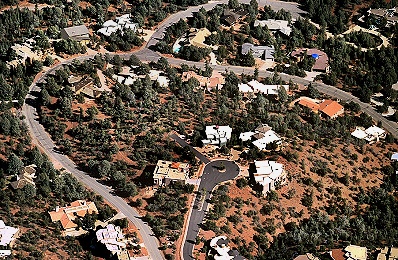
This picture was taken a few years ago. It is a beautiful view from the church on the hill.

Sunday, May 13, 2012

Chapter 10

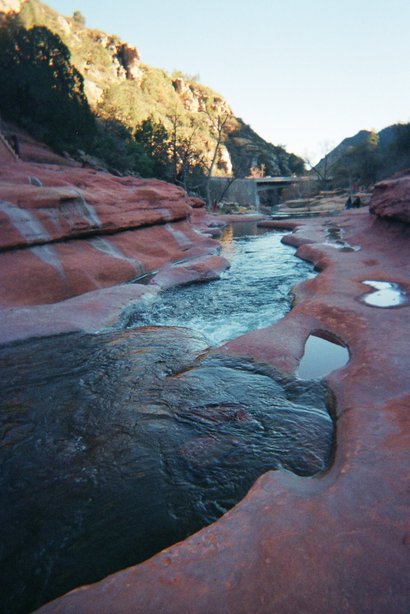
In addition to Sedona's beautiful red rocks, Sedona has a creek that flows through it. Oak Creek provides a refreshing way to cool down in Arizona's heat. Oak Creek Canyon is a river gorge located along the Mogollon Rim in northern Arizona between the cities of Flagstaff and Sedona. This creek is a huge attraction to all visitors. Oak Creek is a tributary of the Verde River and carved the Oak Creek Canyon.  Tourists can also go on river rafting trips to the Verde River. 


For more information on the geography and geology of Oak Creek click on the following link:

Sunday, March 11, 2012

Chapter 9

The Abraham Lincoln Exhibit recently visited the Sedona area on November 21st through December 19th of this past year. This exhibit uses Abraham Lincoln's own words and speeches to encourage visitors to see the real person in all of us. "Interestingly, one of the catalysts for the Civil War was the Dred Scott Decision in 1857. Dred Scott, a slave who at one time lived on the property that is now Oakwood University, petitioned the Supreme Court for his freedom. This request was denied on the grounds that he was a slave, and not entitled to the rights (for example, the right to sue in federal courts) of an American citizen. This decision resulted in increased abolitionists’ efforts and escalated anti-slavery sentiments, which eventually led to the Civil War."

Chapter 8

Many local farmers are trying to encourage local agriculture. There is a weekly farmers market in Sedona were the local fresh fruit is sold. Even in the winter they are able to offer "local honey, red and yellow chards, collard greens,carrots, beets, bokchoy, jerusalem artichoke, dill, cilantro, red potatoes, dandelion, savoy cabbage, onions, kale, turnips, radishes, scallions, broccoli, butternut squash, AZ citrus, pecans, hummus, chicken/turkey/duck/emu eggs, organically grown, bare root, ever bearing strawberry and raspberry plants, hand-made pasta, grass-fed beef, hummus, AZ mesquite flour (gluten-free), baked goods, scissor and small tool sharpening service, worm castings, locally adapted seeds, health tonics, chocolates, jams and jellies goat milk lotion and much more!" These farmers feel that local agriculture is important because it helps the economy, community, the buyers health, and the environment. They provide more information at http://sedona-farmers-market.com/.

Chapter 7

Sedona has hosted more than sixty Hollywood productions from the first years of movies into the 1970s. Sedona's view and rocks are in numerous movies such as Johnny Guitar, Angel and the Badman, Desert Fury, Blood on the Moon and 3:10 to Yuma. 


Chapter 5

One interesting resource that Sedona has is it's cosmic essential oils. Many shops have used these essential oils in healing creams, massage oil, home made medicines and many more products. Another interesting natural resource in Sedona that people travel all over for is its vortex or vortexes. Many believe that vortexes are created by spiraling spiritual energy. These vortexes allow a person to access and heal his or her inner self. Many visitors come to pray, meditate and acquire healing either of the body or mind.

Chapter 4

Sedona is not a metropolitan community. It is very spread out. The homes and neighborhoods are smaller than city neighborhoods. The homes have more property than city homes. It is a smaller city that is usually busiest during the tourist seasons. The ethnicity in Sedona is majority white. There are 81.7% white, 13.1% hispanic, 5.2% other. The home sales in Sedona have gone down significantly. The difference between home values in 2011 and home values in 2006 is about $200,000. Unemployement has also changed over the years; it's rate has gone up.

Chapter 3

Among the first to live in Sedona were the several different Indian tribes. There are many native American Indian and Spanish remains in Sedona such as Tuzigoot Pueblo and Montezuma's Castle. Tuzigoot Pueblo is Apache for "crooked water". The people who lived there were the Sinagua people's which is Spanish for "without water". The Montezuma's Castle (near Sedona) is a settlement built into the cliffs above Beaver Creek. There are tours that explore these areas and view the remains.


Sedona was first discovered by European settlers in 1853. These Euporeans were in search of spices and found Sedona instead. It was claimed by J.J. Thompson. Other settlers joined him to raise horses and cattle. Later Sedona was used farming and orchards. The roads they built attracted more people to Sedona.